I spent fourteen years designing buildings that people actually built.
I stood on rooftops in Singapore during monsoon season, watching water sheet off membranes I’d specified, wondering if I’d gotten the pitch right. I walked through Japanese gardens in Kyoto where every stone felt like it had been placed by someone who knew exactly where your foot would land before you did. I came back to Colorado and drew floor plans for families who told me, six months after moving in, that something about the house felt off.
Not broken. Not ugly. Off.
I couldn’t fix that with a revised elevation or a bigger window. So I started looking for a language that could.
This is not a feng shui blog. This is also not a building-science blog.
It’s something in between. A place where thermodynamics and qi sit in the same room and actually get along.
The title up there — Heat rises, water flows, energy settles — is the only rule you need to remember. Everything else is just how you apply it to your living room, your bedroom, that corner of the kitchen you keep walking past and never want to stand in.
Here’s what I learned in fourteen years of practice:
Architecture school teaches you how to make buildings stand up, shed water, and admit light. It teaches you structural loads and HVAC calculations and the fire-rating of gypsum board. It does not teach you why one room makes you want to sit down and stay awhile, and another makes you want to leave your coffee half-finished.
I spent the first ten years of my career assuming that was subjective. Taste. Personal preference. Not my job.
Then I started noticing patterns.
The house where the couple couldn’t sleep — the bed was against the wall with the electrical panel on the other side. Not haunted. Just a low hum at 60 hertz that their bodies registered even if their ears didn’t.
The apartment where the owner felt like she was always rushing — the entryway opened directly onto a long hallway that ended in a window. Nothing stopped your eye. Nothing stopped your momentum. The architecture itself was telling her to keep moving, even when she was already home.
The open-plan remodel that left the family feeling scattered — they’d taken out a wall and gained square footage but lost the thing that made the house feel like a house. The air moved too fast. Sound bounced. There was nowhere to settle.
These weren’t design flaws. They were energy problems. And they all followed the same rules.
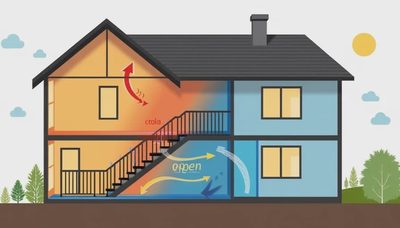
Heat rises. Water flows. Energy settles.
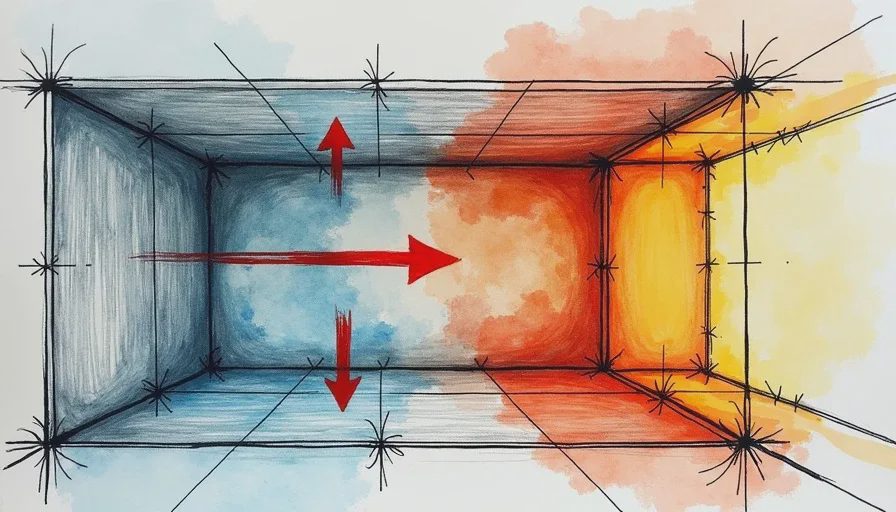
That’s not mysticism. That’s physics.
Your house is a system. Air moves through it. Sound moves through it. Light moves through it. People move through it. The way those elements interact determines how the space feels — and how you feel inside it.
The ancient texts that talk about qi were describing the same system. They just didn’t have ASHRAE handbooks or computational fluid dynamics. They had observation, intuition, and centuries of trial and error. And they got a lot of it right.
So here’s what I do: I read a room the way I used to read a set of construction documents. I look for sightlines, airflow, thermal gradients, sound paths. I look for where energy enters, where it gets stuck, and where it leaks out. Then I translate that into the language of the old texts — and the language of the hardware store.
Most of the time, the fix is something you can hold in your hand.
This is not about selling you crystals.
I’m not against crystals. I’ve just never seen one fix a dead-air zone behind a headboard.
The remedies in this blog start with the room. Not the person, not the occasion, not the zodiac sign. The room. What does this space need? Not what does this person want, or what’s trendy, or what’s on sale. What does the space need to feel like itself again?
Sometimes that’s a lamp in the southwest corner to pull light into a shadow. Sometimes it’s a mobile that moves air and attention simultaneously. Sometimes it’s a walnut bench I built in my garage because the entryway had no place to stop, and a house that doesn’t let you pause is a house that never lets you rest.
The gift guides here will look different from other gift guides. I won’t start with “ten things for people who love gardening.” I’ll start with “your living room has a dead zone on the west wall, and here are three objects that wake it up.” The recipient is incidental. The room is the client.
And what about the things I don’t know?
I don’t know if qi is a substance or a metaphor. I don’t know if the compass directions matter the way the old texts say they do. I don’t know if my daughter June is right — she moved her bed last month and slept better immediately — or if I’m just her father and she likes proving me wrong.
What I do know is this: I can measure airflow. I can trace sightlines. I can stand in a room and tell you where the energy wants to go, and where it’s getting stuck.
And if I can fix the stuck part, the rest usually takes care of itself.
So why this blog?
Because I spent fourteen years designing buildings, and I spent another two years realizing that what people really need is not a better building — it’s a better experience of the building they already have.
Because the language of architecture is too cold, and the language of feng shui is too foreign, and most people are stuck somewhere in between, knowing something is wrong with their space but not knowing what to call it.
Because I think the thing that’s wrong is probably measurable. And fixable. And probably cheaper than a remodel.
Because I want to be the neighbor who hands you a wrench and explains why your house feels off — not with mysticism, but with physics you already understand.
Heat rises. Water flows. Energy settles.
Same rules. Different language.
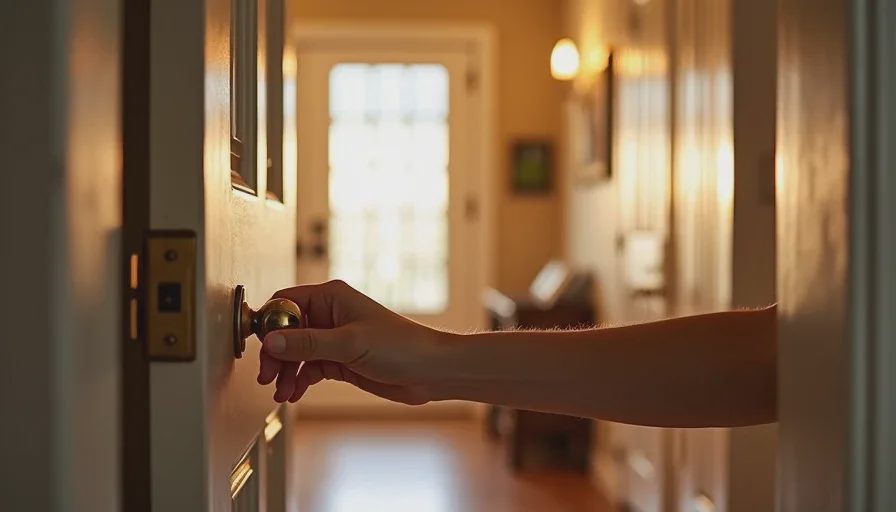
Let’s start with your front door.

No notes yet — write the first.