I run the Skyline Traverse once a year. Not because I'm fast. Because I'm stubborn, and because the route is the most honest piece of terrain I know.
For those of you who don't live in Boulder, the Skyline Traverse is a five-peak ridge run that starts at the south end of the Flatirons and ends at the north. It's about seventeen miles. The elevation gain is somewhere around 5,000 feet. The trail is steep, exposed, and almost entirely above 8,000 feet. It's not a race. It's a conversation with gravity.
I run it in late spring, when the snow has melted and the trail is dry enough to be safe, but wet enough to show me what I need to see.
This year, I noticed something I'd never noticed before.
The water. The drainage lines. Where the snowmelt went, how it traveled, and where it stopped.
I spent the whole run watching the water, and by the time I got to the final peak, I realized I'd just diagnosed every house I'd ever walked into.
What I Saw on the Ridge
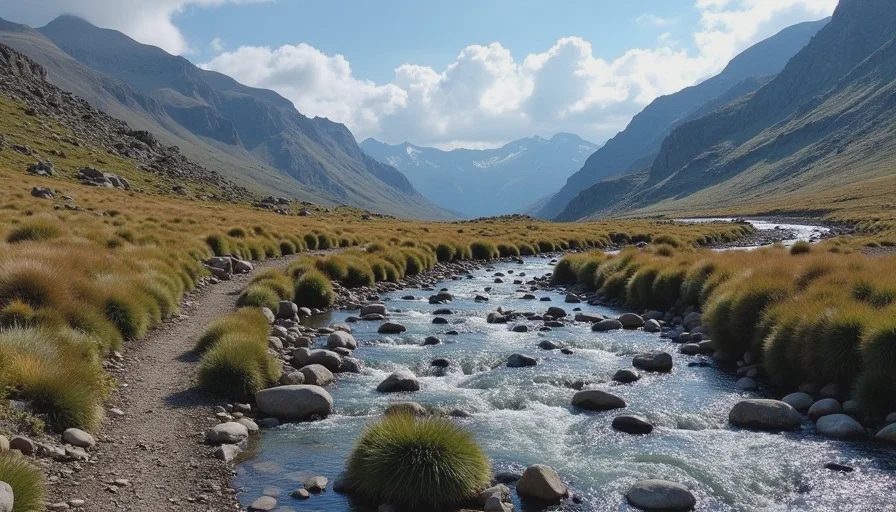
The route starts in a meadow. The trail climbs steeply through a gully. At the top of the gully, the ridge opens up. You can see the whole range.
On a clear day, the water runs down the mountain in visible paths. These paths are not random. They follow the terrain. The water finds the lowest point, the path of least resistance, and follows it. Sometimes the path is a straight line. Sometimes it curves around a boulder. Sometimes it disappears into the ground and reappears fifty feet lower.
The water is not fighting the terrain. It's working with it. It's taking the path the terrain gives it. And it's always, always moving downhill.
Here's the part I never noticed before: the water doesn't just flow. It collects. In the low spots. The depressions. The places where the ridge dips before climbing again. The water pools there, sits for a while, and then moves on.
Those pools are not mistakes. They're the terrain doing what terrain does: holding water until it can move again.
I stood on the ridge, looking at the pools, and I thought: this is exactly what my clients' living rooms look like.
The Living Room as Terrain
Every room is a piece of terrain.
The floor is the ground. The walls are the slopes. The doors and windows are the passes. The furniture is the boulders and outcroppings. And the energy — the qi, the air, the movement of life — is the water.
It moves through the room just like water moves through the landscape. It finds the path of least resistance. It follows the low points. It collects in the depressions. It pools where the terrain holds it.
When you walk into a room and something feels wrong, you're feeling the terrain. The energy is not moving right. It's either moving too fast, too slow, or getting stuck in the wrong place. Just like water on the mountain.
The difference is: you can change the terrain of a room. You can redirect the path. You can break up the pooling. You can create new channels. You are the terrain-builder.
The Three Lessons From the Ridge
Lesson One: Water Follows the Path of Least Resistance
On the ridge, the water didn't fight the boulders. It went around them. It didn't fight the steep slopes. It accelerated. It didn't fight the flat sections. It slowed down.
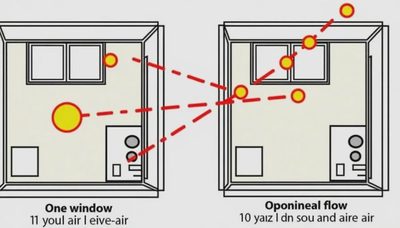
Energy in a room is the same. It follows the path you give it. If you have a wide, open path from the front door to the back window, the energy will travel that path fast. Too fast. It won't settle. It won't rest. It'll just pass through.
If you have a cluttered path, the energy will slow down. It will pool. It will collect around the obstacles. It won't move through — it'll sit.
If you have a path that bends and turns, the energy will follow the curve. It will move at a moderate speed. It will slow at the bends and accelerate on the straights. That's a room that feels alive.
The lesson: the path you create is the path the energy will take. You're not fighting the energy. You're giving it a path. Give it the right one.
Lesson Two: Water Pools in the Low Spots
On the ridge, the pools were in the depressions. The places where the terrain dipped. The places where the slope leveled out. The water collected there because it had nowhere else to go.
In a room, the energy pools in the low spots. The low spots are not physical lows — they're visual lows. The corners. The areas behind furniture. The places where the light doesn't reach. The places where the air doesn't move.
These are your room's dead corners. The energy collects there and sits. It doesn't move because there's no path for it to take.
The lesson: a low spot is not a problem. It's a collection point. You can give it something to do. You can put a lamp there. A plant. A piece of art. Something that acknowledges the pooling and transforms it into something useful.
Lesson Three: Water Moves When It Has a Channel
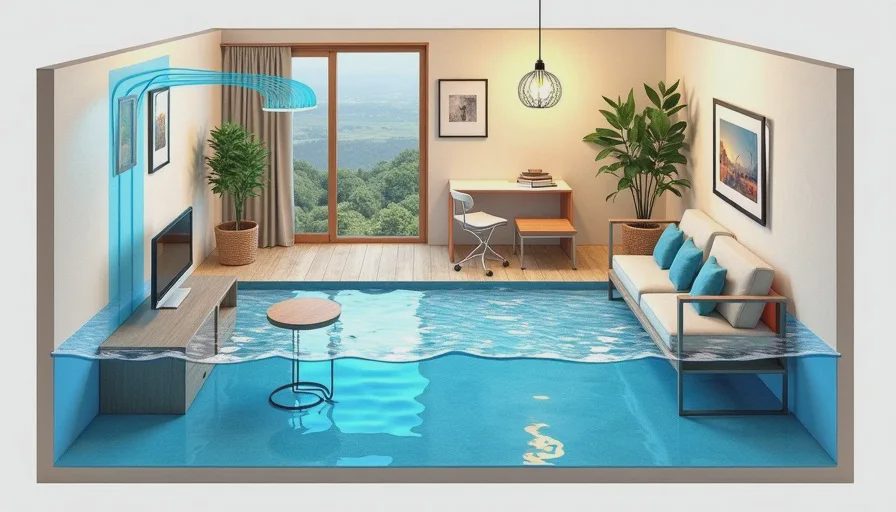
On the ridge, the water didn't just sit in the pools. It eventually moved. It found a channel — a crack in the rock, a groove in the earth, a path that was lower than the surrounding ground.
In a room, the energy moves when it has a channel. A sightline. A clear path. A gap between furniture that's wide enough to walk through.
If your room feels stuck, the energy doesn't have a channel. It's in the pool, and it's staying there. You need to create a channel. Clear a path. Create a sightline. Give the energy somewhere to go.
The lesson: channels are intentional. They don't happen by accident. If you want the energy to move, you have to give it a way.
What I Learned From a Creekbed
There's a creek on the Skyline route. Not a big one — a seasonal creek that's dry by July. But in late spring, it's full. The water runs down the mountain, following the deepest part of the bed. The edges are shallow. The center is deep. The water moves fastest in the center and slowest at the edges.
I sat by the creek for a while. I watched the water move. I noticed something: the water at the edges was moving slowly, almost standing still. The water in the center was moving fast. The difference was the depth.
The edges were shallow. The center was deep. The water in the center had more volume, more momentum, more speed.
Your room is the same. The edges — the walls, the corners — are the shallows. The energy moves slowly there. The center of the room is the deep water. The energy moves fast there.
If you want to slow the energy down, put something in the center. A coffee table. A rug. A piece of furniture that forces the energy to move around it.
If you want to speed the energy up, clear the center. Open the space. Let the energy move fast.
The choice is yours. You are the creekbed.
The Connection to Feng Shui
The old texts talk about water as the movement of qi. They say water should flow but not rush. They say water should bend but not stop. They say water should have clear channels.
They didn't run the Skyline Traverse. But they observed the same things I did. They saw the water moving down the mountain. They noticed where it pooled and where it flowed. They applied those observations to the rooms where people live.
The connection is not mystical. It's physical. The same rules that govern water on the mountain govern energy in the room. The terrain is different, but the principles are the same.
The June Test
June came with me on a lower section of the trail. She walked along a creek and pointed to a pool.
"Dad, look. The water is stuck."
I looked. The water was in a pool, but it wasn't stagnant. It was circulating. A small vortex was turning the water over, bringing fresh water in and pushing stale water out.
"It's not stuck," I said. "It's moving. Slowly, but it's moving."
"Like the corner in my room?"
We'd been talking about her bedroom corner. The one she'd been trying to fix.
"Yeah. The corner in your room is like the pool. It's not stuck — it's just moving slowly. You can speed it up by giving it a channel."
She looked at me. "I don't need a channel. I need a lamp."
She was right.
The Protocol for Your Room
Here's what I do now when I walk into a room that feels stuck.
I look for the pools. The places where the energy is collecting. The low spots. The dead corners.
I look for the channels. The paths the energy is taking. The gaps between furniture. The sightlines.
I look for the path of least resistance. The way the energy is naturally moving. The route it wants to take.
Then I ask three questions:
One: Where is the energy pooling? That's the dead corner. Put something there to activate it.
Two: Where is the energy moving too fast? That's the channel. Put something there to slow it down.
Three: Where is the energy not moving at all? That's the blockage. Remove the thing that's blocking it.
No notes yet — write the first.