I want you to try something.
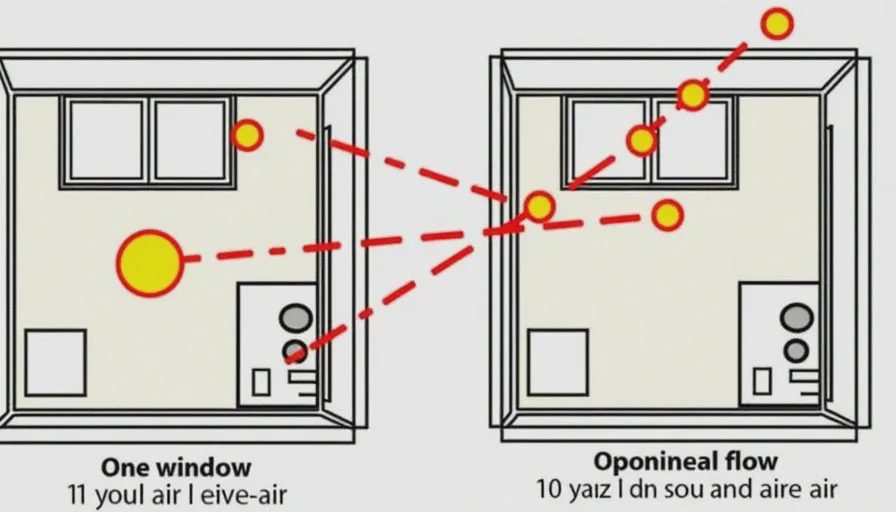
Go into a room in your house. Open one window. Just one. Stand in the middle of the room and feel what happens. You'll feel a little air moving near the window, but the rest of the room will be mostly still. The air will drift in, get confused, and hang around. It's like opening one door at a party — people trickle in, but they don't really circulate.
Now open a window on the opposite wall. Leave both open. Stand in the middle of the room again.
Something just changed.
The air is moving. Not a draft — a flow. It's entering through one window, moving across the room, and leaving through the other. The entire room is now part of a system. The air isn't just present — it's moving. It's carrying heat, moisture, and whatever else was hanging around. It's replacing itself with something fresher.
That's cross-ventilation. And I can make a bold claim about it: cross-ventilation changes a room's energy faster than any lamp, any rug, any object you can buy.
Because the energy in a room isn't just what you put in it. It's what's in the air. And air is the medium of the room's life. If the air is stagnant, the room is stagnant. If the air is moving, the room is alive.
The Physics
Cross-ventilation is driven by pressure differences.
Air wants to move from high pressure to low pressure. When you open a window, you're creating a pressure difference between the inside and the outside. When you open two windows on opposite sides of the room, you're creating a path for the air to travel. It enters through the high-pressure side, moves across the room, and exits through the low-pressure side.
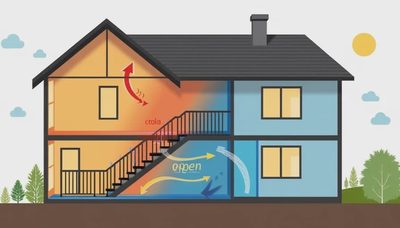
The stronger the wind outside, the stronger the flow. But even on a calm day, thermal differences create pressure. Warm air rises. Cool air sinks. The air moves because it has to. It's the same physics as the stack effect, just horizontal instead of vertical.
The key is the path. If the windows are on the same wall, the air enters and exits in the same place — it doesn't cross the room. If the windows are on adjacent walls, the air moves diagonally — it's a flow, but it's a turning flow. If the windows are on opposite walls, the air moves straight through. That's the strongest flow. That's the one that sweeps the room clean.
What Feng Shui Calls It
The old texts call this the movement of qi.
They say qi should flow through a space, not get stuck. They say qi should move like water — slow enough to be seen, fast enough to be felt. They say a room with stagnant qi is a room where health, wealth, and happiness can't land.
I say the same thing, but in different words: the air in your room should be moving.
Because movement is life. Stagnation is death. The dust gathers in the places where the air doesn't move. The corners that feel heavy are the corners where the air has stopped. The rooms that make you want to leave are the rooms where the air has nothing to do.
Cross-ventilation is the simplest way to keep the air moving. And keeping the air moving is the simplest way to keep the room alive.
The Five-Minute Test
Here's the test I run in every room.
I close all the windows and doors. I stand in the middle of the room and hold a piece of tissue paper. I let it go. If it falls straight down, the air is stagnant. If it drifts, the air is moving. If it swirls, the air is confused.
Then I open one window. I repeat the test. The tissue drifts slightly. The air is moving, but not strongly.
Then I open a window on the opposite wall. I repeat the test. The tissue moves across the room. It doesn't just drift — it travels. The air is flowing.
That's the test. Tissue paper tells you what the room is doing with its air.
How to Use Cross-Ventilation in Real Life
The Setup:
Open two windows on opposite walls. Not just any windows — opposite. One on the north side, one on the south side. One on the east side, one on the west side. If you have a room with windows on adjacent walls, they'll do — but opposite is better.
Open them wide. A few inches of opening isn't enough. You need a path for the air. The taller the opening, the stronger the flow. The wider the opening, the more air moves.
Create a clear path. Don't have furniture blocking the line between the two windows. The air needs a straight shot. If there's a sofa in the way, the air will go around — but it won't flow as strongly.
Close the doors. Cross-ventilation works best when the room is a separate space. If the doors are open, the air can leave through the doors instead of the opposite window. It's better to close the doors and force the air through the windows.
The Timing:
Cross-ventilation is most effective when there's a temperature difference between the inside and the outside. The bigger the difference, the stronger the flow.
On a hot day, open the windows in the morning, before the outside air warms up. Let the cool air enter and push the warm air out.
On a cold day, open the windows at noon, when the outside air is warmest. Let the warm air enter and push the cold air out.
On a mild day, keep the windows open all day. Let the air flow. The room will stay fresh and balanced.
The Duration:
Five minutes of cross-ventilation can change the air in a room completely. The air volume in a typical room is about 2,000 cubic feet. With two open windows, the air can be fully replaced in five to ten minutes. That's faster than any air purifier, and it's free.
What Cross-Ventilation Actually Fixes
Stagnant Air
The most obvious fix. Stagnant air is heavy. It carries dust, odors, and the remnants of whatever was just in the room. A cross-ventilation sweep replaces it with fresh air.
Heat Buildup
A room that's too warm in winter is a room with trapped heat. Open two windows for five minutes, and the warm air escapes. The room cools down, but it also feels less heavy.
Moisture
Bathrooms, kitchens, and basements are moisture zones. Cross-ventilation pulls the moisture out and replaces it with drier air. It's a dehumidifier that works for free.
Stuck Energy
This one's harder to measure, but easier to feel. A room with cross-ventilation doesn't feel stuck. It doesn't feel heavy. It doesn't feel like you can't think. The air is moving, and moving air is thinking air.
The Singapore Lesson, Revisited
Singapore taught me the power of cross-ventilation.
The old buildings in Singapore are designed for it. Open layouts. Large windows on opposite walls. Ventilation blocks that let air pass through. The buildings breathe. They don't need air conditioning — not the old ones. They just need a path for the air to travel.
The new buildings in Singapore are sealed. Glass towers. Air conditioning. No cross-ventilation because the windows don't open. They're energy efficient on paper. They're also sterile, sealed, and disconnected from the weather.
I spent three years in buildings that didn't breathe. I spent three years feeling like I was inside a machine.
Now I live in a house with windows that open. On a good day, I open the windows on the north and south sides, and the air moves through the whole house. It takes about ten minutes to replace the entire volume of air in the house. The house feels different when it's done. Fresher. Lighter. More alive.
The Japanese Garden Logic

In Kyoto, I learned something about movement.
Japanese gardens are designed to be walked through, not looked at. The path winds. The stones are placed to slow you down. The garden is a spatial experience, not a visual one.
The same logic applies to ventilation. Air should move through a room like you move through a garden — not too fast, not too slow. If it's too fast, it's a draft. If it's too slow, it's stagnant. The right speed is the one you don't notice.
Cross-ventilation at the right speed is invisible. The room feels good, but you don't know why. You just know you feel better.
The One That Doesn't Work
I want to mention something that doesn't work.
A fan. A ceiling fan, a floor fan, a table fan. A fan moves air, but it doesn't replace it. It recirculates the same air. It cools you by evaporating moisture from your skin. It doesn't bring in fresh air. It doesn't remove stale air.
If you have one window and a fan, you're not ventilating. You're stirring. The air is moving, but it's not being replaced.
If you have two windows and a fan, you're cross-ventilating. The fan helps, but it's not the driver. The pressure difference is the driver. The fan is just a helper.
Open the windows first. Then decide if you need a fan.
The June Test
June's room has windows on the north and south walls. She opens them both in the morning. She told me once that the room feels "different" when she does.
"Different how?"
"It's like it's not holding its breath."
I asked her where she learned that phrase.
"I don't know. It just felt right."
The room holds its breath when the air doesn't move. You can feel it. The pressure is slightly different. The temperature is slightly different. The sound is different.
Cross-ventilation makes the room breathe. The air enters, travels, and leaves. The room is not holding its breath. It's inhaling and exhaling.
June didn't know the physics. She just knew the feeling.
The Protocol for Every Room
Here's what I do with every room I diagnose.
I open the windows. Both of them. Opposite sides of the room. I let the air flow for five minutes. Then I close them and see what's changed.
Nine times out of ten, the room feels better. The temperature is more even. The smell is gone. The energy is lighter. The room isn't fixed — it's just reset.
The reset costs nothing. It takes five minutes. It works every time.

No notes yet — write the first.