I'm sitting in my living room as I write this. It's February. The sun is low in the southern sky, and it's pouring through the windows at an angle that hits the floor about six feet from the wall. The patch of sunlight is warm enough that I could sit in it without a sweater. The rest of the room is cool enough that I'm wearing one.
My dog is lying in the patch of sun. She's been there for three hours. She hasn't moved. She knows something I had to go to architecture school to learn: that south-facing light is different. It's not just brighter. It's warmer. Not in color temperature — in actual, measurable, infrared radiation.
That patch of sun on my floor is doing more work than my heating system. It's free. It's clean. And it's the single most powerful source of energy in any house.
Here's what the old texts call it: yang energy.
Here's what I call it: solar gain.
Same thing. Different language.
What Solar Gain Actually Is
In plain English: sunlight enters a building through windows, gets absorbed by floors and walls, and turns into heat.
The physics is simple. Visible light passes through glass. When it hits a surface — a floor, a wall, a piece of furniture — that surface absorbs the light and re-emits it as longer-wave infrared radiation. That's heat. That's the warmth you feel when you sit in the sun.
The amount of solar gain depends on three things:
Orientation. South-facing windows get the most direct sunlight in winter, when the sun is low. East-facing windows get morning sun. West-facing windows get harsh afternoon sun. North-facing windows get no direct sun at all — just diffuse light.
Glass. Double-pane glass lets in about the same amount of visible light as single-pane, but it traps the heat better. Low-emissivity (low-e) coatings can reduce heat loss while letting in light. The combination is what makes a window efficient.
Mass. The materials in your house store heat. Concrete, stone, brick, tile — these are thermal mass. They absorb heat during the day and release it at night. Wood and carpet don't store heat the same way. They're insulators, not storage.
The old texts call this the fire element. The sun enters the house. It brings warmth. It transforms the space. That's fire energy — activating, moving, enlivening.
But fire can be too much. And fire can be too little.
What Happens When You Have Too Much
South-facing windows are a gift. They're also a liability.
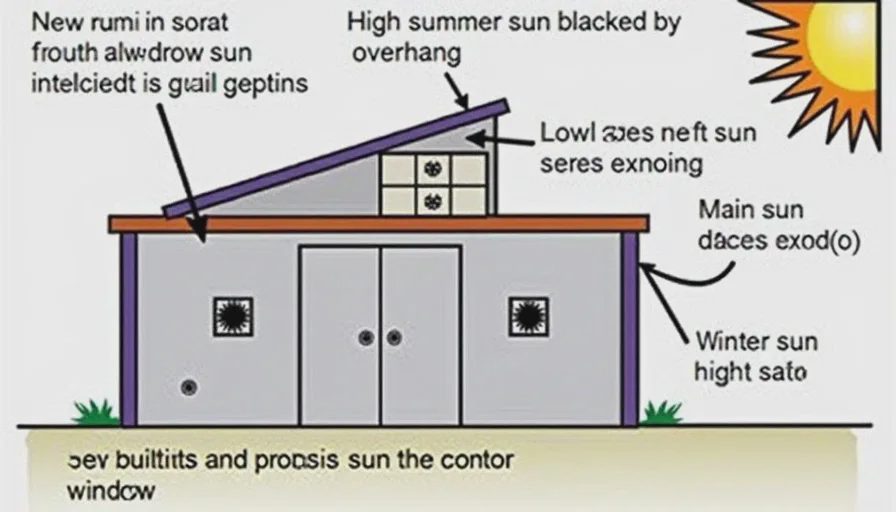
In winter, you want the sun. You want it pouring through the windows, heating the floors, warming the house. In summer, you don't. In summer, the sun is high in the sky. It hits the windows at a steeper angle. It doesn't reach the floor — it hits the glass and heats the room directly. That's not a gift. That's an oven.
I've been in houses where the south-facing living room is uninhabitable in July. The windows are too big. There's no overhang. No shading. No curtains. The room gets to eighty-five degrees by noon. The air conditioner runs constantly. The owners wonder why their energy bills are so high.
Too much solar gain is too much yang energy. It's the fire element without balance. The space is active, warm, and alive — but it's also aggressive, draining, and uncomfortable.
The Fixes:
Overhangs. A properly sized overhang blocks the high summer sun while allowing the low winter sun to enter. It's the oldest passive solar trick in the book. Frank Lloyd Wright used it. The ancient Greeks used it. It works.
Shades. External shades block the heat before it enters the glass. Internal shades block the light but let the heat in. External shades are better. Awnings, louvers, or even a simple row of shrubs.
Heat-rejecting glass. Low-e coatings can reduce solar gain without reducing visible light. They're not magic, but they help.
Thermal mass. If you're going to let the sun in, give it something to heat. A tile floor, a brick wall, a stone fireplace. The mass absorbs the heat and releases it slowly. The room doesn't spike — it settles.
What Happens When You Have Too Little
I also see the opposite problem.
A house with small south-facing windows. Or no south-facing windows. Or windows that are shaded by trees, porches, or neighboring buildings. The house is dark in winter. It's cold. The heating system runs constantly. The owners feel like they live in a cave.
Too little solar gain is too little yang energy. The space is quiet, calm, and cool — but it's also static, heavy, and unresponsive. The fire element is missing. The house doesn't wake up.
The Fixes:
Bigger windows. If you can, enlarge the south-facing windows. Or add new ones. South-facing glass is the cheapest source of heat you'll ever buy.
Lighter finishes. Dark floors absorb light. Light floors reflect it. A lighter floor makes the room feel brighter and warmer. It doesn't add heat, but it redistributes the light that's there.
Mirrors. A mirror on the opposite wall can reflect sunlight deeper into the room. It doesn't add heat, but it spreads the light, and light is the precursor to heat.
Reflective surfaces. White walls, pale furniture, light-colored textiles. The more light that bounces around, the more visible light is available to become heat.
The Thermal Mass Equation
This is the thing most people get wrong.
Thermal mass doesn't create heat. It stores heat. If you have a south-facing window with no thermal mass, the sunlight heats the room directly — and the room cools down as soon as the sun goes down. The heat is there, then it's gone. The room spikes and drops.
If you have a south-facing window with thermal mass, the sunlight heats the mass during the day. The mass releases the heat at night. The room stays warm longer. The temperature is more stable. You use less energy.
The old texts say: put the fire element in the south. They didn't know about thermal mass. They just knew that a room with a big south window and a stone floor felt different than a room with a south window and a carpet. They were right.
What to Buy:
If you have too much solar gain:
A light-colored rug to reflect heat
External shades to block the heat before it enters
A ceiling fan to circulate the air
If you have too little solar gain:
A mirror to reflect light deeper into the room
A light-colored floor or furniture to bounce light around
A large plant that reaches up — plants are living thermal mass
The Kyoto Lesson
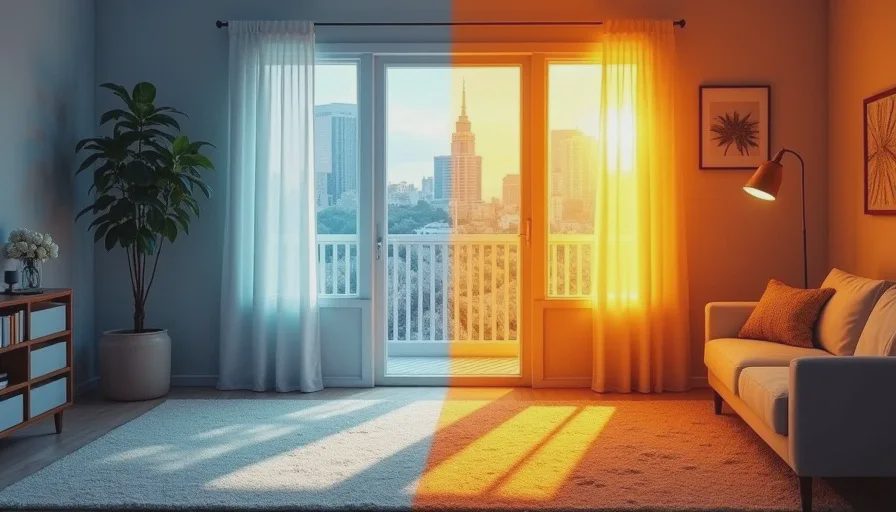
In Kyoto, I lived in a house with shoji screens — translucent paper over wooden frames. The south side of the house had large windows, but the shoji diffused the light. It softened the solar gain. The room was bright but not hot.
The Japanese built houses with two layers of shading: an overhang and a screen. The overhang blocked the high summer sun. The screen diffused the remaining light. The result was a room with natural light and no direct heat. It was a perfect balance of yang energy — present but not overwhelming.
I don't expect you to install shoji screens in your Boulder living room. But you can learn from the principle: control the sun before it enters the room. Shading is not decoration. It's energy management.
The Singapore Lesson
In Singapore, I worked on high-rise apartments with floor-to-ceiling glass. The buildings were designed to maximize views, not comfort. The solar gain was ferocious. The apartments were uninhabitable without air conditioning.
I learned something there: yang energy is only useful if you can use it. In Singapore, the sun is the enemy. There is no winter. There's no season when you want the sun. The fire element is always too strong.
The solution is to treat yang energy as a resource, not a constant. In cold climates, you want it. In hot climates, you resist it. In mixed climates, you manage it.
Boulder is a mixed climate. Cold winters, hot summers. You need south-facing windows in winter. You need to shade them in summer. You can have both. You just have to design for them.
The Living Room Experiment
I ran a test in my own living room.
I took the temperature of the floor in the sun patch at noon in February. It was seventy-eight degrees. The rest of the floor was sixty-two. That's a sixteen-degree difference. Same room, two feet apart.
I put a white rug over the sun patch. The temperature dropped to seventy-one. I removed the rug. The temperature went back up.
The rug was reflecting the light instead of absorbing it. That's not a flaw — it's a tool. If you want heat, use dark surfaces. If you want light, use light surfaces. If you want both, use a mix.
I moved the rug to the edge of the sun patch, so it reflected light onto the dark floor. The dark floor absorbed the reflected light. The room felt warmer overall. Not just the sun patch — the whole room.
That's the trick with yang energy. It's not about the sun itself. It's about what you do with it.
The Fire Element, Translated
The old texts say: fire element = south = warmth = activity = transformation.
The physics says: solar gain = south-facing windows = heat = movement = phase change.
It's the same thing. The language is different. The principle is the same.
When you bring the sun into a house, you're bringing transformation. You're warming a space. You're changing the energy of the room. You're doing the same work that a fireplace does, but more efficiently.
Yang energy is not optional. It's the sun doing what the sun does. Your job is not to block it or ignore it. Your job is to manage it — to use what you need and redirect what you don't.
The June Test
June's room has a south-facing window. She likes it in winter. She sits on her bed in the sun and reads. She doesn't like it in summer. She closes the blinds.
"Dad, why is my room so hot in summer?"
"The sun is higher. It hits the window differently."
"Can we put something on the window to stop it?"
"We can. What do you want to put there?"
She thought about it. "A big plant. One that reaches the window."
She was wrong about the physics — a plant doesn't block much heat. But she was right about the principle: you manage the sun with something that's present, not absent. You work with it. You don't just close the blinds.
I put a small shade on the outside of her window. It blocks the heat before it enters. She still has the light. She doesn't have the heat.
She told me: "My room feels like it's not fighting anymore."
The fire element is balance. Not too much. Not too little. Just enough.
A Quick Reference
Problem | What It Means | Fix |
|---|---|---|
Room is too hot in summer | Too much solar gain | External shade; light-colored surfaces; ceiling fan |
Room is too cold in winter | Too little solar gain | Bigger windows; light-colored walls; reflective surfaces |
Temperature spikes and drops | No thermal mass | Add tile, stone, or concrete; use dark surfaces in sun patch |
Room is bright but cold | Light without heat | Use low-e glass; add thermal mass; check window orientation |


No notes yet — write the first.