I came back from Kyoto with a problem.
Not a big problem. A small one. The kind of problem you don't notice until you've been somewhere else and then you come home and everything feels slightly wrong.
The problem was my front door.
I'd walk into my house in Boulder and I'd feel it immediately: the transition was wrong. I'd open the door, step inside, and I was in. No pause. No change. No moment of arrival. Just outside, then inside. A binary switch. A door that opened and closed and did nothing else.
In Kyoto, the transition was different.
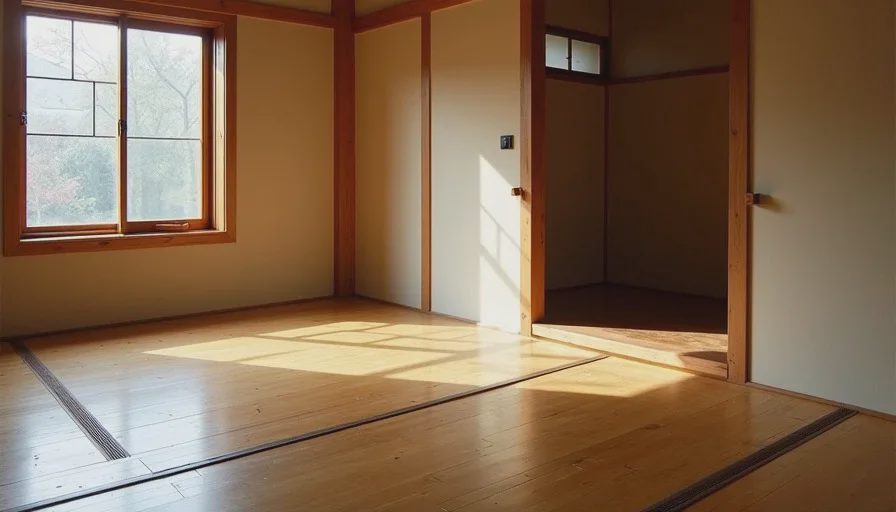
The houses there have a genkan—a sunken entryway. A space that's lower than the rest of the house. A space where you remove your shoes. A space where you pause before stepping up into the living area. The genkan is not a room. It's a moment. A moment between outside and inside. A moment where you leave the street behind and prepare to enter the house.
In Kyoto, I didn't think about the genkan. I just used it. I took off my shoes. I stepped up. I entered the house. It was normal. It was routine.
When I came back to Boulder, I realized that routine was missing. My house had no genkan. It had a foyer. A space that was the same level as the rest of the house. A space that was there for function—a place for shoes, a place for coats—but not for transition.
I walked through my front door and I didn't feel anything. I just went from outside to inside. No pause. No shift. No moment of arrival.
That's not a design problem. It's an experience problem. And it took me five years in Japan to notice it.
The Genkan: A Spatial Buffer
The genkan is a spatial buffer. A zone between the street and the house. A zone where you're neither inside nor outside. A zone where you transition.
It's typically about two feet lower than the rest of the house. You step down from the street, step into the genkan, and then step up into the house. The step is a physical reminder that you're crossing a boundary.
The genkan is also where you remove your shoes. This is not a ritual—it's a physical act. You bend down. You take off what you're wearing on your feet. You place them carefully. You stand up. And then you step up into the house.
That sequence of actions changes your body. Your posture shifts. Your weight shifts. Your breathing shifts. The physical act of removing your shoes is a physical act of letting go. You're leaving the street behind. You're entering the house.
The genkan is also a visual buffer. It's often separated from the rest of the house by a screen, a door, or a change in material. The floor is different—tile or stone instead of wood or tatami. The ceiling is lower. The space is compressed.
When you step up into the house, you experience a release. The compression of the genkan gives way to the openness of the living space. You feel like you've arrived.
The genkan is not a room. It's a threshold. And thresholds matter.
The American Foyer: A Functional Space
The American foyer is different.
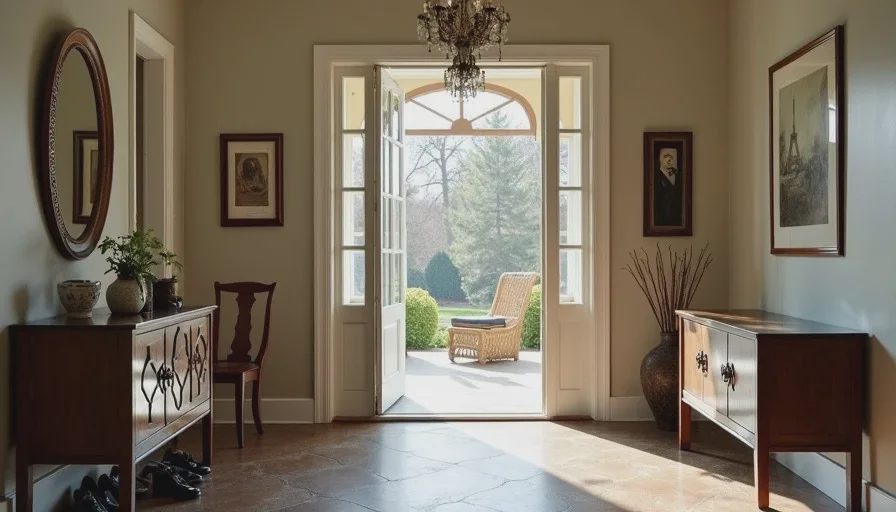
It's usually the same level as the rest of the house. The floor is the same material. The ceiling is the same height. The space is open. You walk in, and you're in the house. There's no compression. There's no release. There's no transition. There's just a space that's used for storing coats and shoes.
The foyer is functional. It's a place to hang your coat. It's a place to drop your keys. It's a place to put your shoes—but not a place to take them off. The act of removing shoes is separate from the act of entering.
The foyer doesn't ask anything of you. It doesn't ask you to change your state. It doesn't ask you to pause. It doesn't ask you to transition. It just asks you to store your stuff.
The difference is not about function. The American foyer functions. It does what it's supposed to do. The difference is about experience. The genkan creates an experience. The foyer provides a service.
What the Genkan Teaches About Energy
The genkan teaches that the threshold is a place of transformation.
When you cross a threshold, you change. You move from one state to another. The street is fast, public, demanding. The house is slow, private, receptive. The shift between them should be gradual. A moment. A pause. A space where you can leave the street behind.
If you don't have that pause, you carry the street into the house. You walk in the door and you're still in the mode of the outside. Your shoulders are still up. Your breath is still shallow. Your mind is still processing the street.
The genkan gives you a place to put that down. It's a space where you can change your shoes, change your posture, change your state. It's a space where you can arrive.
I think the old texts would call this the movement of qi. The qi enters the house through the door. In a house with a genkan, the qi enters the buffer zone, slows down, and then enters the living space. In a house with a foyer, the qi enters and moves directly into the house. No pause. No deceleration.
The qi doesn't settle. It just moves through.
How to Create a Genkan in an American House
I don't expect you to remodel your house. A sunken entryway is a major construction project. But you can create the experience of a genkan without the construction.
Here's how:
Create a threshold.
Put a rug or a mat at the front door. Not just any rug—a defined rug. One that signals the boundary between outside and inside. The rug should be lower than the floor—a visual step, even if it's not a physical one.
Change the material.
If your entryway is hardwood, put a tile or stone mat at the door. The change in material signals the change in space. You're moving from one zone to another.
Lower the ceiling.
If you have a high ceiling in the entryway, install a lower ceiling—a drop ceiling, a soffit, a pendant light that hangs low. The compression of the genkan is created by a lower ceiling. A pendant light can do the same thing.
Make it small.
The genkan is a small space. It's not open. It's not expansive. It's compressed. If you have a large foyer, make it feel smaller. Add a console table. Add a bench. Add a plant. Create a sense of enclosure.
Put something there.
The genkan has a purpose. It's a place for shoes. A place for coats. A place for keys. A place for everything you carry from the outside. Put those things in a defined place. The act of putting them there is the act of releasing them.
Light it differently.
The genkan is often dimmer than the rest of the house. The lighting is warm and low. The transition from bright outside to dim inside is a transition of state. If you can, put a warm, low light in the entryway. Overhead light is for function. A table lamp is for transition.
The American Adaptation
I've done this in my own house. I don't have a genkan. But I have a threshold.
I put a rug at the door—a dark, heavy rug that's lower than the floor. I put a bench next to the rug. I put a lamp on the bench. I put a tray on the bench for keys.
The rug signals the boundary. The bench is where I sit to take off my shoes. The lamp creates a warm, low light. The tray is where I put down what I'm carrying.
It's not a genkan. But it's a moment. The transition is slower. The arrival is more intentional. The house feels different.
I walk in. I pause. I put down my keys. I sit down. I take off my shoes. I stand up. I step into the house.
It takes thirty seconds. But those thirty seconds are the difference between arriving and just showing up.
The June Test
June has a mat outside her door. Not a rug—a mat. A small, woven mat that says "stop here."
I asked her why she has it.
"Because you said we should have a place to stop."
I did say that. I didn't know she was listening.
She stops there. She takes off her shoes. She puts them on the mat. She opens the door. She steps into her room.
It's not a genkan. But it's a moment.
The Connection to the Old Texts
The old texts say the door is the mouth of qi. The energy enters through the door and moves through the house. If the entry is too open, the qi moves too fast. If the entry is too cluttered, the qi gets stuck. The ideal entry is a balance—a space where the energy can enter and then settle.
The genkan is that balance. It's a space where the energy enters, slows down, and then moves into the house.
The American foyer is not that balance. It's a space where the energy enters and moves directly into the house. No pause. No settlement.
The difference is the threshold. The genkan has a threshold. The foyer does not.

No notes yet — write the first.