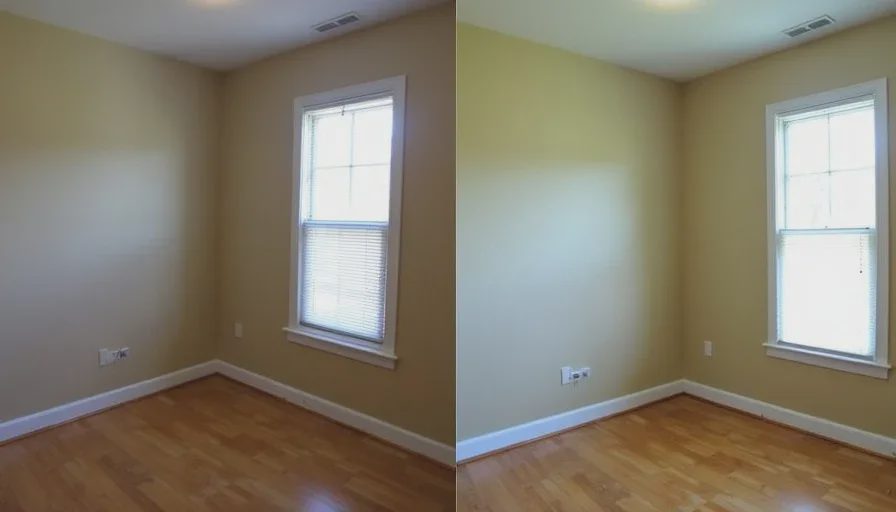
I spent three years in Singapore.
Three years in high-rise apartments with floor-to-ceiling glass and air conditioning that never stopped running. Three years standing on balconies that looked out over a city of towers, each one taller than the last, each one built to maximize floor area and minimize energy loss.
The ceilings were low. Eight feet, maybe eight and a half. Standard for a high-rise. The kind of ceiling you don't notice until you've lived with something different.
I didn't think about it. I was too busy adjusting to the heat, the humidity, the relentless tropical sun. I was too busy learning how buildings breathe in a climate where the air is always trying to kill you. I was too busy being an architect in a place where architecture is a survival mechanism.
Then I came back to the States. I walked into a friend's house in Denver. A 1970s ranch. Eight-foot ceilings. Standard. The same ceiling height I'd been living with in Singapore.
And I realized something had changed.
The ceiling felt low. Not just low—oppressive. I'd spent three years not noticing the ceiling height, and now I couldn't stop noticing it. Every room with an eight-foot ceiling felt like a box. Every room with a nine-foot ceiling felt like a relief. Every room with a ten-foot ceiling felt like a cathedral.
I didn't learn about ceiling height in Singapore. I learned about it by leaving Singapore. I learned that you don't know what you're missing until you've lived without it.
The Singapore Lesson
Singapore is hot. Really hot. The kind of hot that makes you understand why air conditioning was invented. The kind of hot that makes you appreciate every architectural decision that keeps the heat out.
The old buildings in Singapore have high ceilings. Not because they're grand—because they need to move heat. Hot air rises. If the ceiling is high, the hot air rises above the occupied zone. The space where people sit and sleep is cooler. The heat is pushed up and out.
The new buildings in Singapore have low ceilings. Not because they're efficient—because they're cheap. A lower ceiling means less volume to cool. Less volume means less air conditioning. Less air conditioning means lower energy bills. The logic is sound. The experience is terrible.
I lived in a new building. Low ceilings. Efficient. And I spent three years feeling like the roof was pressing down on me.
I didn't know it at the time. I just knew I felt tired. Stuffy. Slightly claustrophobic. I assumed it was the heat, the humidity, the stress of living in a foreign country.
It was the ceiling.
The Physics of Ceiling Height
Here's what I learned after I came back.
Ceiling height affects three things: thermal comfort, air quality, and spatial perception.
Thermal Comfort
Hot air rises. In a room with a high ceiling, the warm air collects at the top. The occupied zone—the space where you sit, stand, and breathe—stays cooler. In a room with a low ceiling, the warm air has nowhere to go. It stays in the occupied zone. The room feels stuffy, even if the temperature is the same.
The same principle applies in reverse. In a room with a high ceiling, cool air sinks. The warm air rises. The occupied zone stays comfortable. In a room with a low ceiling, the air mixes. The temperature is uniform—but uniform isn't comfortable. Comfort is a gradient. A gradient that a low ceiling can't create.
Air Quality
The air in a room is only as good as its circulation. In a room with a high ceiling, the air has room to move. It can rise, fall, and circulate. In a room with a low ceiling, the air is trapped. It sits there, getting stale. The same volume of air, but less movement. Less movement means less oxygen exchange. Less oxygen exchange means you feel tired.
Spatial Perception
This is the one you feel most immediately. A room with a high ceiling feels larger. Not because it's larger—because your brain interprets vertical space as horizontal space. A room that's tall feels wide. A room that's short feels narrow.
The opposite is also true. A room with a low ceiling feels smaller. The walls close in. The floor feels closer. The room feels like a container, not a space.
The American Standard
Eight feet. That's the standard. That's the ceiling height in most American homes.
It's not a design decision. It's an economic one. Eight feet is the height of a standard sheet of drywall. It's the height of a standard stud. It's the height that minimizes waste and maximizes efficiency.
It's also the height that minimizes comfort.
I've been in rooms with eight-foot ceilings that felt fine. I've also been in rooms with eight-foot ceilings that felt like coffins. The difference is not the ceiling height—it's what you do with it.
What to Do With a Low Ceiling
If you have an eight-foot ceiling, you have two choices: ignore it or work with it.
Option One: Ignore It
This is the most common approach. You paint the ceiling white. You install recessed lighting. You leave the walls bare. The room is clean, bright, and forgettable. The ceiling is there, but you don't notice it. You don't notice it because it's not doing anything.
Option Two: Work With It
This is the approach I recommend. You use the ceiling as a design element. You draw attention to it. You make it part of the room.
Here's how:
Paint the ceiling a darker color. Dark colors recede. A dark ceiling makes the room feel taller because your eye doesn't stop at the ceiling—it moves through it. A white ceiling is a wall. A dark ceiling is a horizon.
Use vertical stripes. Stripes on the walls draw the eye upward. The ceiling feels higher because your eye is moving vertically. It's a visual trick that works every time.
Hang something from the ceiling. A light fixture. A mobile. A plant. The object draws the eye up. The ceiling is no longer a flat plane—it's a surface that holds something.
Use wall sconces instead of overhead lights. Overhead lights are good for utility. Sconces are good for height. They draw the eye vertically. They create a vertical line that the eye follows.
Keep the floor clear. Clutter at the floor level makes the room feel smaller. Clear floor space makes the room feel larger—including vertically. A clear floor is a floor that lets your eye travel up.
What to Do With a High Ceiling
High ceilings are easier. They already work. But they can work better.
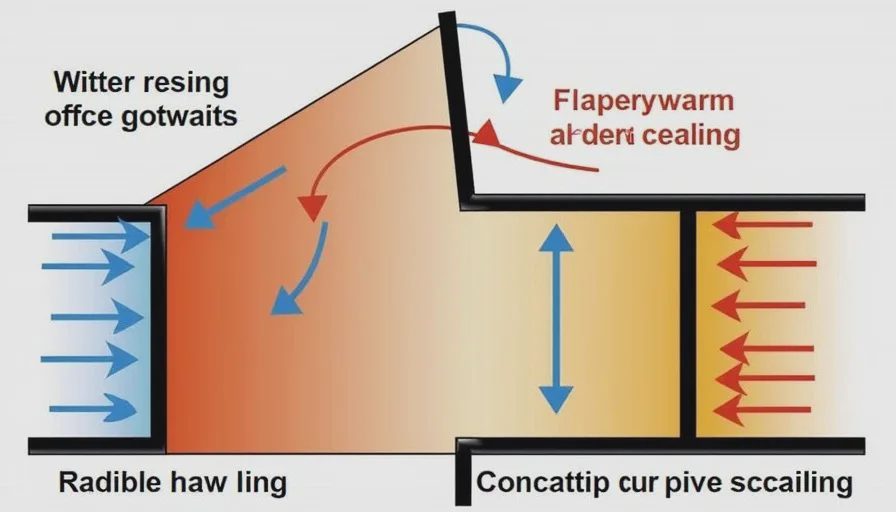
Use thermal mass. A high ceiling is a thermal gradient. The warm air at the top, the cool air at the bottom. If you have thermal mass—a tile floor, a stone wall—it will absorb the heat at the bottom and release it at the top. The room will be more comfortable.
Use a ceiling fan. A ceiling fan at the top of a high ceiling can push the warm air down or pull the cool air up. It's a thermostat you control with a switch.
Use a pendant light. A pendant light at a high ceiling draws the eye up. The room feels connected—not like a container with a lid.
Don't fill the vertical space with shelves. Vertical space is valuable because it's empty. If you fill it with shelves, you've turned a high ceiling into a low ceiling. Leave the space above eye level empty. It's the room's reserve.
The Singapore Data
I collected some data on this. Not formally—just observation.
In Singapore, I lived in a building with eight-foot ceilings. The building was new. Efficient. The air conditioning was always on. The temperature was always the same. And I always felt tired.
In a friend's apartment in an older building, the ceilings were ten feet. The building had cross-ventilation and ceiling fans. The temperature was a few degrees warmer. And I felt wide awake.
The difference wasn't the cooling. The difference was the air movement. The high-ceiling apartment had air that moved. The low-ceiling apartment had air that sat.
The data backed up the feeling. I tracked my sleep quality. Better in the high-ceiling apartment. My energy levels. Higher in the high-ceiling apartment. My mood. Better in the high-ceiling apartment.
I don't know if it was the ceiling height itself, or the things the ceiling height made possible. But I know the difference was real.
The June Test
June's room has an eight-foot ceiling. It's low. It's standard. It's the thing I'm writing about.
She hasn't complained. But she's also nine, and nine-year-olds don't complain about ceiling height. They complain about not having enough screen time.
I asked her if her room felt small.
"It's fine."
"Does it feel like the ceiling is too low?"
"I don't think about it."
That's the problem. The ceiling is so low she doesn't think about it. It's not part of the room's experience. It's just there, neutral, forgettable.
I want to paint it a darker color. I want to see if it makes the room feel taller.
She doesn't care. She just wants her bookshelf.
The One Thing I'd Change
If I could change one thing about American houses, it would be the ceiling height.
Not to make them taller. To make them intentional.
Eight feet is fine for some rooms. It's fine for hallways. It's fine for closets. It's fine for bedrooms where you're lying down. It's not fine for living rooms. It's not fine for kitchens. It's not fine for the rooms where you spend your time.
A room with a high ceiling is a room that breathes. It's a room that feels open. It's a room that lets you think.
A room with a low ceiling is a room that holds its breath. It's a room that feels closed. It's a room that tells you to move on.
The difference is a foot and a half. It's the cost of a few sheets of drywall. It's the difference between a room that works and a room that doesn't.


No notes yet — write the first.