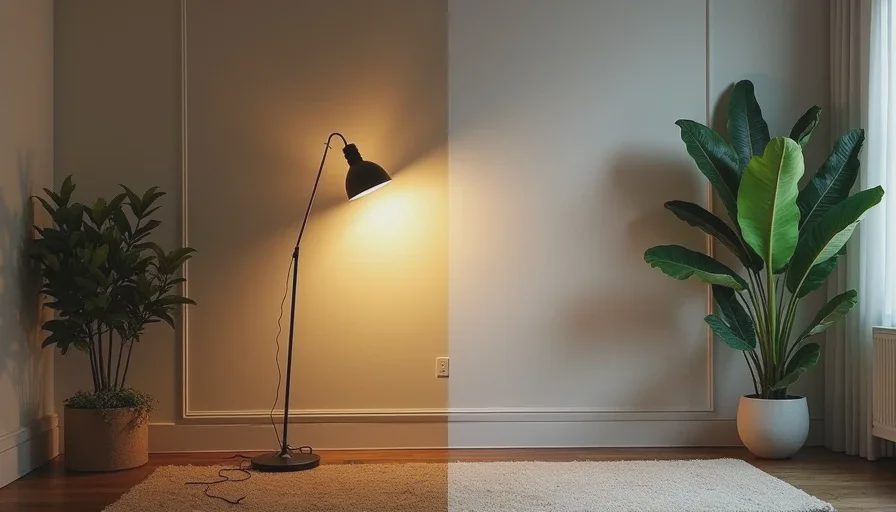
I have a client. Let's call her Sarah.
Sarah lives in a 1970s ranch house in south Boulder. The house is solid. Good bones. Good light. But there's a corner in her living room that she has been trying to fix for six years.
She's put a plant there. The plant died. She's put a chair there. Nobody sat in it. She's put a small table there with a stack of books. The books gathered dust. The corner remained a place where energy went to retire.
"I don't know what's wrong with it," she told me. "I've tried everything."
I walked over to the corner. I stood there for a moment. I looked at the sightlines, the light, the airflow. Then I turned to her and said:
"Nothing's wrong with it. You just haven't given it the right thing."
What a Dead Corner Actually Is
Let's define our terms.
A dead corner is not a corner that's empty. It's a corner that doesn't participate in the room. It's a corner that you walk past, not into. It's a corner where dust gathers faster than anywhere else. It's a corner that makes the room feel smaller than it actually is.
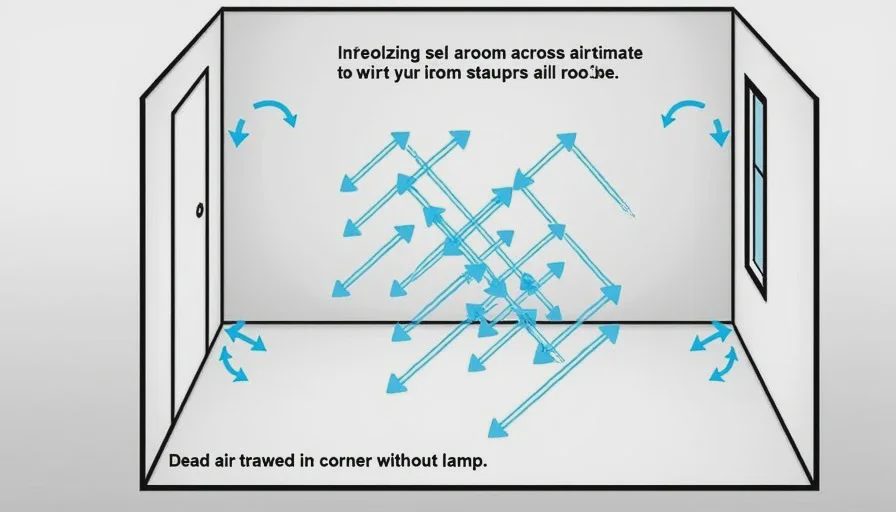
Here's the physics: corners are where air stalls. Air moves across a room in a predictable pattern — in through one opening, out through another, with a gentle circulation in between. But in the corners, the air stops. It doesn't flow. It just sits.
The old feng shui texts call this stagnant qi. I call it a ventilation dead zone. Same phenomenon, different dictionary.
The problem isn't the corner. The problem is that the corner isn't being invited to participate in the room's energy. It's off the grid. It's not connected to the rest of the space. So the energy settles there and stops.
A dead corner is a corner without a job. Give it a job, and it comes alive.
The question is: what job?
Object One: The Mirror
A mirror is the most common fix for a dead corner. I understand why. It's intuitive. The mirror reflects light, expands the space, and gives the eye something to look at. It's the go-to solution for a hundred interior design blogs.
And it almost never works.
Here's why: a mirror in a corner reflects the corner. Not the rest of the room. Not the light from the window. The corner itself. So you're looking at the same dead zone, just doubled.
Unless you position it at exactly the right angle, and unless that angle catches a window or a door, a mirror in a corner just shows you a dark corner. Which is not an improvement. It's just a larger dead corner.
There are exceptions. A mirror angled to reflect a window can bring light into a corner. A mirrored screen or a multi-panel mirror can create a layered effect. But a simple mirror, hung on the wall in a corner, facing straight out? That's not a fix. That's a confirmation that the corner is still dead.
The mirror's function is to redirect sightlines. If it doesn't redirect them somewhere good, it's just a decoration. And a dead corner doesn't need decoration. It needs participation.
Object Two: The Mobile
A mobile is a more interesting intervention. It moves. It catches light. It changes the airflow pattern in the corner by making the air visible.
I've recommended mobiles in a few houses. And every time I do, I ask the client the same question: "Is there a window within six feet of this corner?"
If the answer is no, the mobile doesn't work.
A mobile needs a draft. Not a draft you feel — a draft that moves air gently enough to spin the mobile's arms. In most rooms, the air in a dead corner isn't moving enough to activate a mobile. So the mobile hangs there, inert, becoming another object that doesn't participate.
If you have a corner with a window nearby, a mobile can be a beautiful fix. The window creates a thermal gradient that moves air, and the mobile catches that movement and translates it into visible energy. The corner suddenly has life. Not because the mobile itself is special. Because the mobile is showing you something you couldn't see before: the air moving.
But if the window isn't close, the mobile is just a mobile. And a dead corner with a hanging object is still a dead corner.
Object Three: The Lamp
This is the one that works.
Not a floor lamp that points up. Not a reading lamp that points down. A lamp that points into the corner, with a shade that casts light on the walls and the ceiling, creating a gradient of warmth that redefines the entire space.
Here's the physics: a lamp in a corner does three things at once.
First, it activates the vertical surfaces. Light reflecting off two walls and the ceiling creates a sense of enclosure. The corner stops being a void and starts being a volume. The room feels larger because your brain can now read the boundaries of the space.
Second, it creates thermal movement. A lamp generates heat. Not a lot — but enough to create a small convection current. Warm air rises, cool air moves in to replace it, and suddenly the air in that corner is moving. Not a breeze. A circulation. And circulation is the opposite of stagnation.
Third, and this is the one nobody expects: a lamp in a dead corner changes the entire room's lighting balance. Most rooms are lit from one side — the window side. The opposite side is dark. A lamp in the dark corner pulls the eye across the room, balancing the weight of the light and making the whole space feel more even.
I've put lamps in dead corners in more than sixty houses. I have yet to see one fail.
The Northwest Corner Exception
A quick aside.
In the classical feng shui map, the northwest corner is associated with helpful people, travel, and the metal element. I'm not going to tell you what to put there based on that. But I will tell you that the northwest corner is often the first place I look.
Why? Because of the sun. In North America, the northwest corner gets the last light of the day. In the late afternoon, the sun hits the northwest facade with a warm, low-angle glow. That corner should be active. It should be the room's golden hour.
Instead, most people treat the northwest corner like any other corner. They ignore it. And they miss the best light in the house.
Put a lamp in the northwest corner. Not for the metal element. Because that corner deserves to be lit. It's the room's final bow.
What Actually Worked for Sarah
I brought a lamp to Sarah's house. An IKEA lamp with a paper shade and a warm bulb. I put it on the floor in her dead corner, pointed it at the ceiling, and told her to leave it on for a week.
She called me five days later.
"The room feels bigger," she said. "Not bigger, but — more settled. I can't explain it."
"I can," I said. "You can now read the edges of the room. Your brain has a reference point. You're not trying to hold the whole space in your head anymore. It's already held. The lamp did the work."
She kept the lamp. The corner is no longer dead. It's where she puts her keys now. It's where she stops before leaving the house.
A corner with a job.
The Selection Criteria
When you're choosing an object for a dead corner, here are the three questions I ask:
Does it move the air? If it doesn't, it's not participating in the room's circulation. It's just sitting there.
Does it add light? Not just visible light — ambient light that lifts the dark areas. A corner without light is a corner that doesn't exist.
Does it create verticality? Corners need height. Something that reaches up, draws the eye, and makes the space feel tall. A floor lamp is ideal. A tall plant is acceptable. A stack of books is not.
One object can do all three. Most objects do none.
The Test
If you have a dead corner in your house, try the lamp test.
Buy a cheap floor lamp. A paper shade. A warm bulb. Place it in the corner. Point the shade upward, so the light grazes the walls. Leave it on for a week.
After seven days, ask yourself two questions:
Do I notice the corner more?
Do I notice the corner less?
If you notice it more, the lamp is drawing attention to the corner without fixing it. Move it to a different corner, or get a taller shade.
If you notice it less, the lamp is doing its job. The corner is now a functioning part of the room. You can stop noticing it because it's no longer a problem.
A fixed corner is invisible. The problem is gone. You don't look at it anymore because it's not demanding your attention.
That's the goal.
June has a lamp in her room. It's in a corner that used to be dead. She put it there herself, and she didn't ask me for advice. She just moved her old desk lamp to the floor, pointed it at the ceiling, and told me it made the room feel better.
"Dad, you're always talking about corners," she said. "I fixed this one."
She did. And she didn't buy anything new. She just moved what she already had.
Sometimes the remedy is already in the house. You just need to put it in the right corner.


No notes yet — write the first.