I have a friend. Let's call him Mark.
Mark lives in a house with a beautiful entryway. High ceiling. Terracotta tile. A window that catches the morning sun. The kind of entryway that makes you think "this is going to be a great house."
And then you step inside and you don't know where to go.
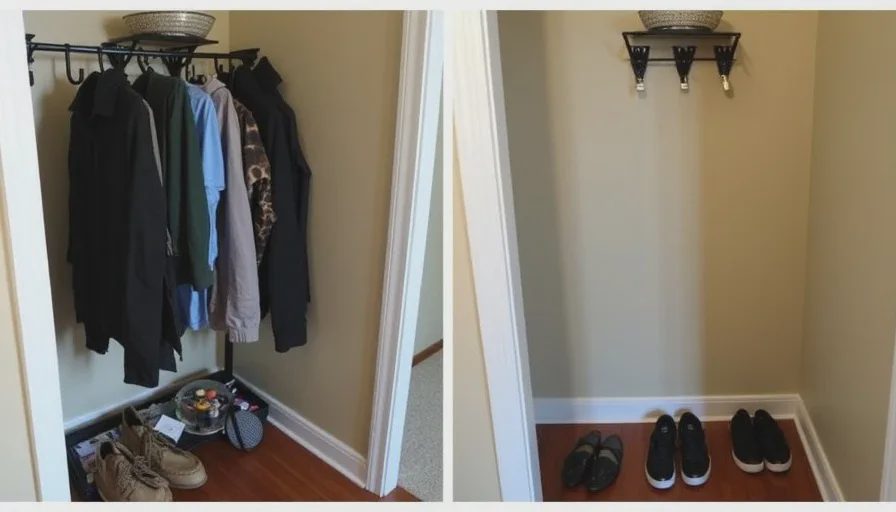
His entryway has a bench. The bench is empty. It has a coat rack. The coat rack is full. It has a small table. The table is covered in mail, keys, sunglasses, and a single sneaker that no one has claimed for at least six months.
The entryway is a beautiful holding zone. It's also a bottleneck. The energy comes in the door and gets stuck. Not because there's too much stuff. Because there's not the right stuff.
I told Mark: "Your entryway doesn't need less. It needs different."
He looked at me like I'd just suggested he paint the ceiling purple.
"Different how?"
"Your entryway is trying to do four things at once," I said. "It's trying to welcome, store, organize, and transition. That's too many jobs for one space. You need to give each job its own object."
The Four Jobs of an Entryway
Every entryway has four jobs.
It needs to welcome — to say "you have arrived" before you've taken your coat off.
It needs to store — to hold the things you carry in from the outside.
It needs to organize — to separate the things that stay from the things that go.
It needs to transition — to slow you down so you can shift from outside energy to inside energy.
One object can do one job well. Two objects can do two jobs well. Four objects can do all four jobs. But you need the right objects. And they need to be in the right place.
Here are the four I reach for most often.
Object One: A Surface That Waits
The first job is welcome.
Not a table. Not a shelf. A surface that waits. Something that says "put something down here, take a breath, and then proceed."
The key is that it needs to be empty when you walk in. Not almost empty. Completely empty. A surface that's empty is an invitation. A surface that's covered is a demand.
I've seen entryways with beautiful consoles that are covered in mail. Those consoles are not welcome surfaces. They're storage surfaces that happen to be near the door. The energy comes in, sees a covered surface, and thinks "there's no room for me here."
A welcome surface is a surface that's always ready. It's not doing another job. It's just waiting for whatever walks through the door.
What to buy: A console table, a low shelf, a wide bench. Something with a flat top and nothing on it. Put it near the door, but not blocking the path. The moment you walk in, you should see a place to put something down.
What it earns: The moment of arrival. The three seconds between entering and being present. A surface that waits is a surface that says "you're here now."
Object Two: A Container for Departure
The second job is storage.
Not storage for everything. Storage for the things that leave the house with you. Keys, wallet, sunglasses, the thing you'll forget if it's not in the right place.
The problem with most entryway storage is that it's backward. It holds the things you bring in, not the things you need to take out. So you come home, drop your keys on the table, and then spend fifteen minutes looking for them the next morning.
A container for departure is a vessel that holds the things you need to leave with. It's not for incoming mail. It's not for shoes you just took off. It's for the keys you'll need tomorrow, the sunglasses you'll wear in the morning, the wallet that should never leave this spot.
What to buy: A bowl, a tray, a shallow dish. Something with sides that keep objects contained. Put it on the welcome surface or near the door. The rule is: if it goes out with you, it lives here. Nothing else.
What it earns: The five minutes you used to spend searching. A container for departure gives you time back, and time is energy.
Object Three: A Hook That Releases
The third job is organization.
Not a coat rack. A hook. Not a row of hooks. A single hook that's positioned exactly where you drop your coat.
The problem with coat racks is that they encourage accumulation. You hang one coat on the rack. Then another. Then a bag. Then a scarf. The rack becomes a monument to indecision. Each object that hangs there is an object that hasn't been put away. The rack is holding energy in place instead of releasing it.
A single hook changes the dynamic. It says "hang one thing here. The rest goes somewhere else." It forces you to make a decision about what you're carrying. If you're carrying too much, you have to choose. And choosing is an act of release.
What to buy: A wall hook. One. Not a set. Not a rack. One hook, placed at the height where your hand naturally reaches when you enter. If you need more than one hook, you're not hanging coats. You're storing them.
What it earns: Clarity. A single hook is a decision point. It asks: is this necessary? If not, put it down elsewhere. If yes, hang it here. And that's all it holds.
Object Four: A Light That Lowers
The fourth job is transition.
Not a bright light. A lower light. Something that changes the quality of the light from what's outside to what's inside.
The outside world is bright, fast, and demanding. The inside world should be warm, slow, and receptive. The transition between the two happens in the entryway. And the fastest way to signal that transition is with light.
A light that lowers is a light that changes the room's energy. It's not brighter than the outside. It's different. Warmer. Softer. More contained. It tells your nervous system: you're not outside anymore. You can relax.
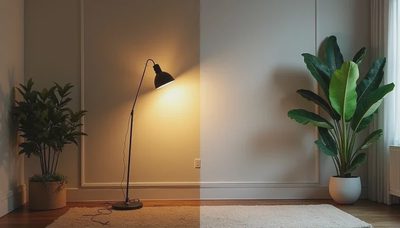
What to buy: A lamp with a warm bulb and a shade that diffuses. Table lamp, floor lamp, wall sconce. Position it so it's the first thing you see when you close the door. The overhead light is for utility. The lower light is for arrival.
What it earns: The shift. The moment your shoulders drop, your breath slows, and you become present. A light that lowers is a light that says "you're home."
The Four in Order
Here's the sequence I recommend:
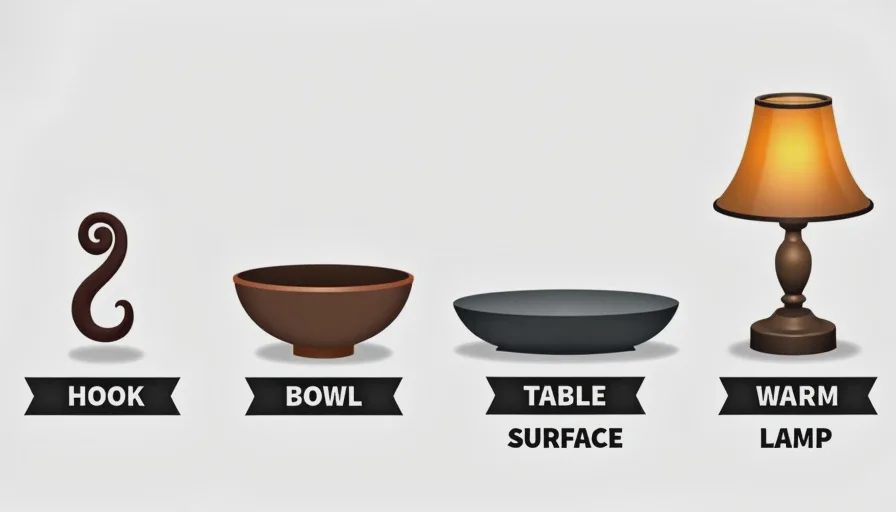
The hook goes first. It's the first thing you encounter when you walk in. It catches the coat, the bag, the weight of the outside. The hook releases what you're carrying.
The bowl is next. It catches the keys, the wallet, the small things you need to remember. The bowl organizes what you'll need tomorrow.
The surface is third. It's the empty space where you can put something down. A grocery bag. A package. A book. The surface waits for whatever comes next.
The light is last. It's the thing you turn on when you close the door. It changes the room's energy from outside to inside. The light settles you.
Four objects. Four jobs. One entryway that works.
The One-Hook Rule
I want to pause on the hook because it's the one I've seen fail the most.
People buy a hook. They install it. They hang a coat on it. The next day, they hang a bag on it. The day after that, they hang two coats. By the end of the week, the hook is full and the entryway is cluttered again.
The hook doesn't fail. The rule fails.
The rule is: one hook, one object. If you need more hooks, you're not managing your entryway. You're managing your wardrobe. Put a coat rack in the closet. Put a pegboard in the mudroom. But in the entryway, just one.
I've had clients tell me "that's not enough storage." They're right. It's not enough storage. It's not supposed to be. The entryway is a transition, not a storage room. If you're storing things there, you're not transitioning. You're piling.
The Mark Redemption
I went back to Mark's house a month after our conversation.
He'd installed a single hook. Put a small bowl on the table. Cleared the surface. Added a warm lamp on a dimmer.
The entryway was empty. Not bare — present. There was a coat on the hook. Keys in the bowl. Nothing on the table. The lamp was on.
He told me he'd stopped losing his keys. He'd stopped feeling rushed in the morning. He'd stopped coming home and feeling overwhelmed by all the things that needed to be put away.
"Your entryway is the first thing you see when you come home," I said. "If it's chaotic, you're starting your evening in chaos. If it's calm, you're starting your evening in calm."
He looked at the lamp. "I thought you were going to tell me to get a crystal or something."
"I don't do crystals. Crystals don't hold keys."
A Quick Reference
Object | Job | What It Earns |
|---|---|---|
A surface that waits | Welcome | The moment of arrival |
A container for departure | Storage | Time back in the morning |
A hook that releases | Organization | Clarity about what matters |
A light that lowers | Transition | The shift from outside to inside |
The June Test
June has a hook in her room. It's for her backpack. She knows the rule: one hook, one object. If she hangs anything else on it, the hook stops working.
I didn't teach her that. She figured it out on her own. She told me: "When I hang too much on my hook, I can't find my backpack in the morning."
That's the whole lesson. A hook that's full is a hook that's not working. A surface that's covered is a surface that's not welcoming. A light that's bright is a light that's not transitioning.
Four objects. Four jobs. One entryway that moves energy.
Not because the objects are special. Because the space finally knows what it's for.



No notes yet — write the first.